

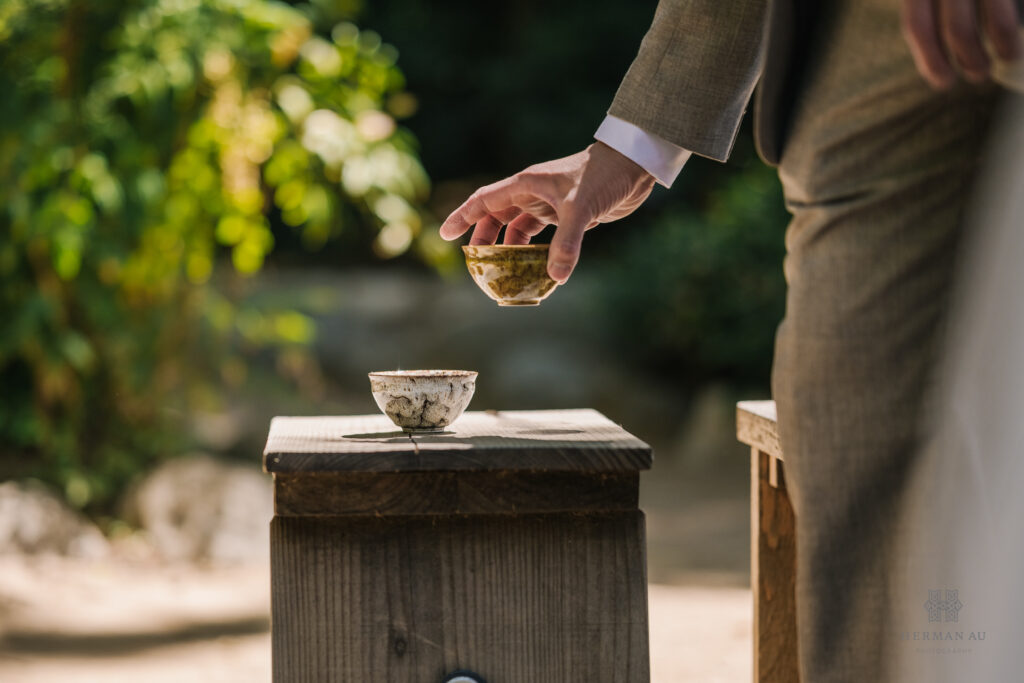
For many Asian and Asian-American couples, the wedding tea ceremony is a heartfelt tradition that bridges generations. This ritual, deeply rooted in Chinese culture and shared among many Southeast Asian communities—including Japanese, Vietnamese, Malaysian, and Singaporean cultures—serves as a formal introduction of the newlyweds to each other’s families. Historically, the tea ceremony was considered the definitive moment a couple became husband and wife. In modern weddings, it remains a cherished way to honor parents, relatives, and elders, while symbolizing respect, gratitude, and family unity.
We’ve put together a guide here to give you a comprehensive breakdown of what we’ve learned over the years photographing hundreds of tea ceremonies over the last 16+ years of so you don’t feel like you’re lost being a part of a tea ceremony.
The Significance of Tea
Tea is more than just a drink—it’s a symbol of purity, respect, and harmony. The gesture of serving tea can signify many layers of meanings, like as a gesture of respect, appreciation, or even serve as an apology.
Serving tea to parents and elders represents a couple’s gratitude for their upbringing, sacrifices, and blessings. In return, the family offers blessings for a happy marriage. This moment is also when many couples receive meaningful gifts, such as jewelry or hongbao (red envelopes), which carry wishes for prosperity and good fortune. Unlike in most western cultures where there are often times a definitive moment where the newlyweds are pronounced a married couple, that very moment in the Asian marriage ceremonies are mostly absent. But on a flip side, it is more of a longer form of ceremomy asking for blessings from everyone, and receiving their seals of approval. That very process is the very essence of what a tea ceremony is.
Choosing the Right Time and Date
There is no one “correct” time to host a tea ceremony. Some couples choose to hold it in the morning before the wedding ceremony, while others schedule it on a separate day entirely to allow more time for conversation and connection. Oftentimes, couples that choose to hold their cultural traditions on a separate day are able to better engage with their extended relatives and heritage (more about two day wedding celebrations). When choosing a date, couples may consult family elders, consider traditional lunar calendar dates, or simply select a time that works well logistically.
Tea Ceremony Etiquette and Practices
A few traditions shape the tea ceremony:
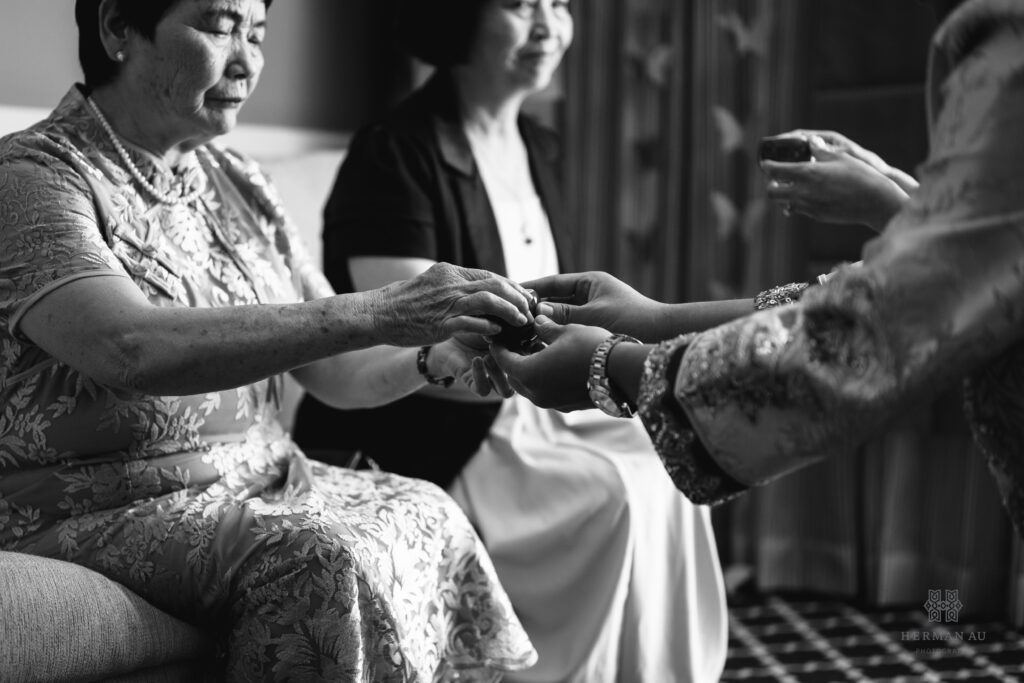
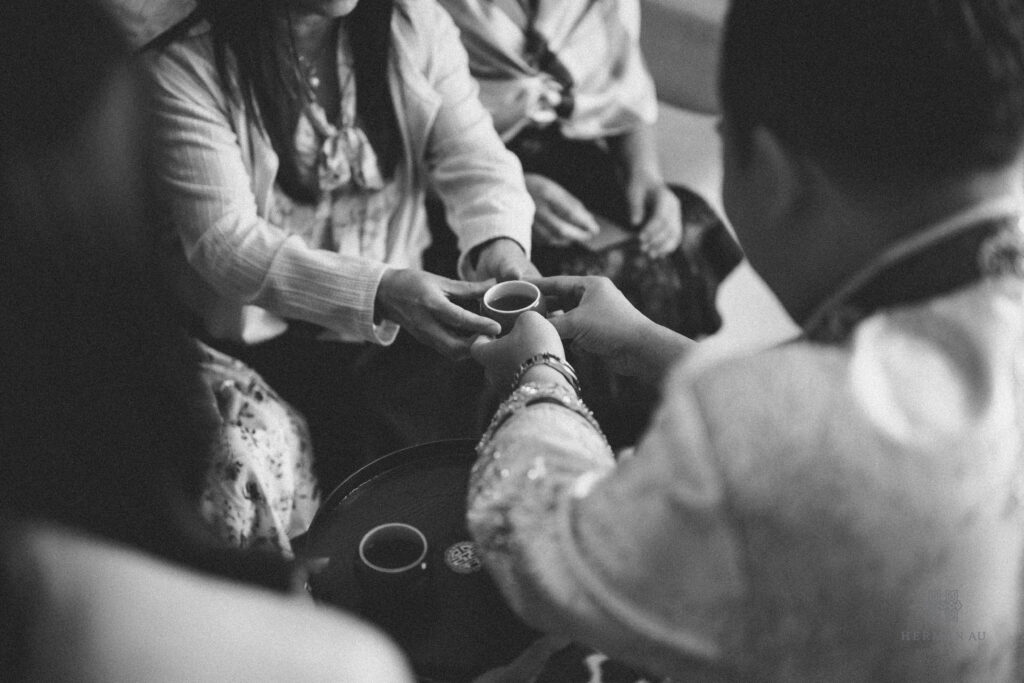
- Always serve tea with both hands: When serving tea, always use both hands as a sign of respect. This in generally a gesture of politeness in all Asian cultures, and is crucial in showing your understanding of the meaning of serving tea.
- Kneeling: Some families uphold the kneeling tradition, while others prefer standing, remaining seated, or even a polite bow—this often depends on generational, regional, and individual customs. Kneeling to some families are viewed as a tradition in the past, which itself is an evolved form of kowtow (while kneeling, bowing one’s head to the ground), and has moved on to a simple bow. Check with your families and see what is seen as the most appropriate form.
*From a photographic standpoint, kneeling brings you much closer to the ones you’re serving tea to, and often times create much more intimate moments. Get yourselves a couple of red cushions if you choose to do it in this form to save your knees! - Serving two cups: Traditionally, each tea recipient is offered two small cups of tea, one from the bride and one from the groom. So when 2 persons sit down to be served, the newlyweds would each give them a cup so the tray would consist of 4 cups per serving. Sometimes that is simplified to 1 cup for each person instead.
SIde note: You’ll see the number 2 reappear in many occasions, and they all symbolize “the couple as a pair”. If you happen to notice in some of the old school Chinese restaurants having a dragon and phoenix on the back wall, that’s the symbolism to represent them as a pair made for each other. - Order of serving: Generally speaking parents are served first, followed by grandparents, aunts, uncles, and older siblings, in order of seniority. But some families out of respect to the elders have the grandparents go ahead of the parents, and this would be something that you need to confirm with the parents ahead of the ceremony. Pro Tip: It would be helpful to try to have a list of order before the tea ceremony, so definitely communicate with the parents and grandparents so there is no misunderstanding and to ensure a smooth flow of the ceremony.
- Red: This is a bit of a bonus read here. The color red is generally the color of choice for celebrations in the Chinese culture, which in some occasions NOT the case in other Asian cultures. For example, Koreans generally use white envelopes as a formal way to giving away money for celebrations, gifts, or even funerals; but Chinese only use red envelopes for celebrations, and white envelopes are only used for funerals. Having a deeper understanding of your family history if you’re any Asian descent goes a long way!
Cultural Attire and Presentation
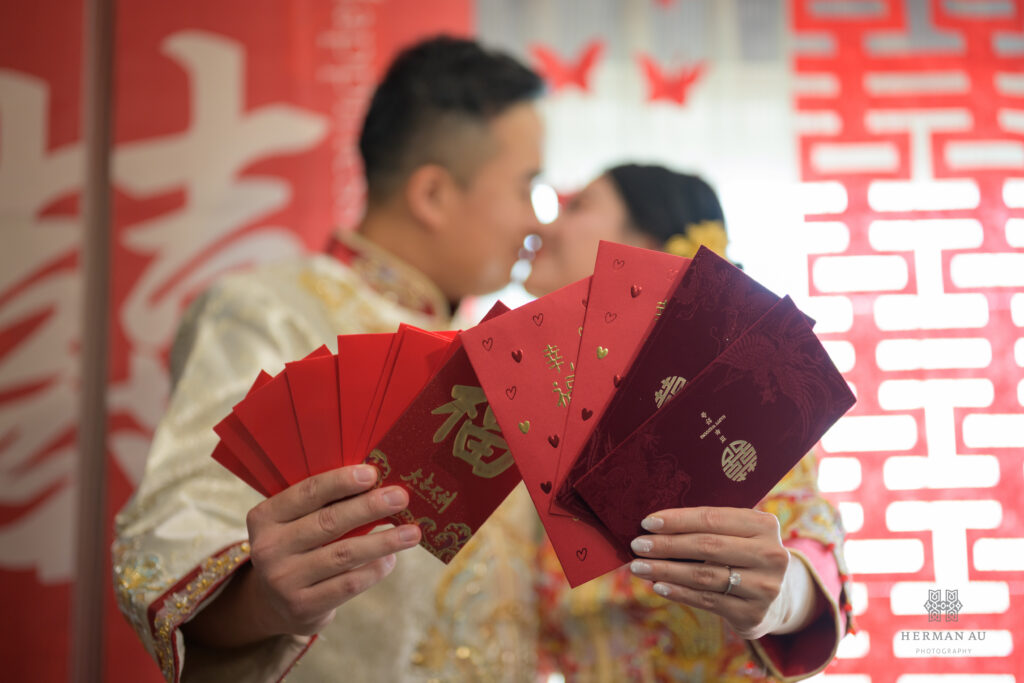
Couples often wear traditional clothing that reflects their heritage. We’ve seen mostly the bride wearing Qi Pao (Chinese), Hanbok (Korean) or Ao Dai / áo dài (Vietnamese) as cultural attires for tea ceremonies, and overall most grooms just wear what they’d wear for the rest of the day. But we’ve also seen in some occasions the groom also dress in their respective cultural attire for the occasion. This is especially fun for intercultural weddings where culture and traditions blend, and can be a very fun way of introducing each other to your own cultures as well as a way to learn more about your own if you never explored deep into it.
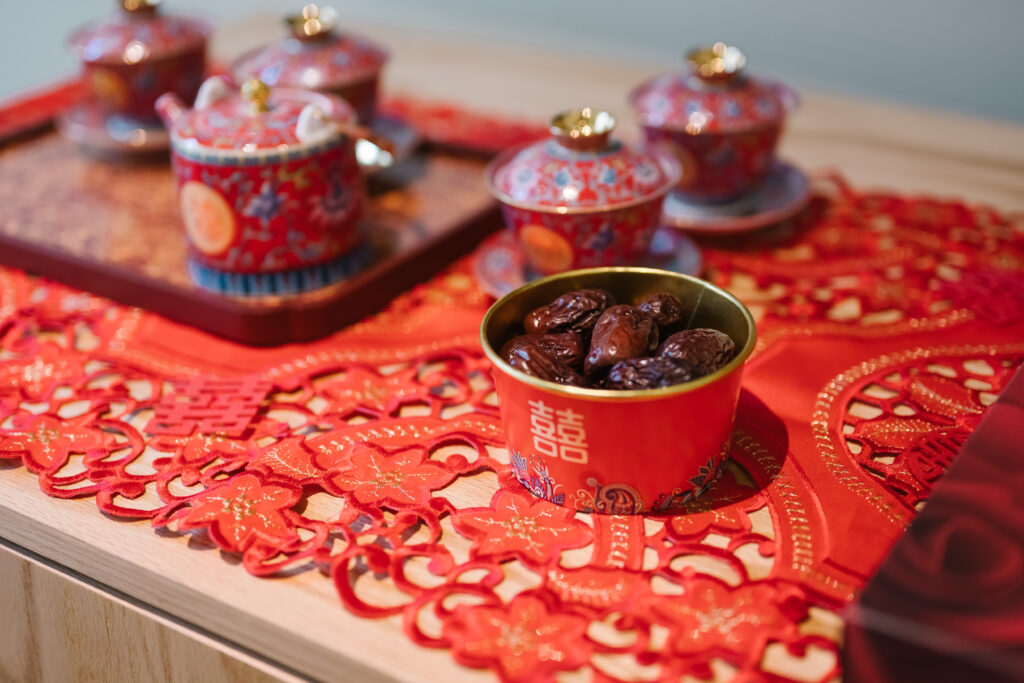
Tea Sets are often ornate, decorated with symbols of double happiness (囍) or phoenix and dragon motifs for marital harmony.
Extra: Most people don’t realize but the character actually is exactly what it suggests by combining 喜 + 喜 into a 囍. 喜 itself loosely translates to joy, celebrations, love ;and by combining two of them side by side refers to two persons in love joining together! You will spot a lot of the character 囍 in many places from red envelopes to tea sets. The design of the character makes a wonderful motif as decorations!
Extra 2: You can certainly find some of those cultural attires on amazon, but be advised that those dresses can be very tricky with fitting, especially with the qipao being a tight fitted dress. You may want to source it locally to ensure the best fitting.
Gifts, Red Envelopes, and Blessings
After the tea is served, it is customary for elders to offer blessings along with red envelopes or gifts. The hongbao (red envelope) typically contains money in even amounts (considered lucky), while jewelry—such as gold bangles or jade pieces—carries cultural symbolism for wealth, protection, and long life.
It is entirely optional, but this is also your chance to give the newlyweds some words of wisdom also. Don’t bother looking this up on the search engine, let it flow from your heart and allow those words to encapsulate your feelings of watching them grow up and now getting married, and passing the torch to the next generation.
The Role of the Host
While some couples guide the tea ceremony themselves, some actually appoint a host—often a respected family member or wedding coordinator—to direct the order of serving, ensure tea is replenished, and keep the event flowing smoothly. Sometimes the host does a little bit of Emcee work to make certain announcements or comments to lift the spirits of everyone. This allows the couple to focus fully on the emotional moments without worrying about logistics. Don’t be shy, this isn’t one of those serious ceremonies where everybody just stay silent and observe, it is rooted in the culture for everybody to come together and celebrate together.
Post Ceremony
In many families, the tea ceremony is followed by a celebratory meal. This might be a full banquet or a simpler lunch, depending on tradition and planning preference. It’s a chance for relatives to mingle, welcome the new spouse into the family, and share in the joy of the occasion.
Whether you’re a couple incorporating a tea ceremony into your wedding day or a bridal party member looking to understand your supporting role, knowing the meaning and customs behind the tradition makes the moment richer. As a wedding photographer, I’ve found these ceremonies to be among the most intimate and emotionally resonant parts of the day—a beautiful blend of history, culture, and love.
TLDR — Tea Ceremony Quick Tips
For Couples:
- Decide on timing early – Will it be before the wedding, after, or on a separate day? It is increasing popular to handle all the cultural ceremonies on a separate day. Do you want that professional captured as well?
- Confirm traditions with family – Kneeling, bowing, or standing can vary between cultures and generations. Also make sure you come up with a full list of orders of tea being served.
- Prepare your tea set – Choose a decorative set with cultural motifs, and have extra cups ready. If you have a huge family and its going to take a lot of tea cups, consider using some of these cute decorated disposal cups on top of the ornate ones for the most important people.
- Plan your attire – Traditional outfits add authenticity, but modern or blended looks work too.
- Assign a host – Let a family member or coordinator manage the flow so you can be present in the moment. You wedding planner may also be a good resource for this as well as some of the experienced ones may just be able to run this smoothly with the help of a relative or two.
- If you haven’t noticed by now, hiring a professional wedding team who is experienced with all this goes a long way! Not only would they be able to better capture the essence of these precious moments, but they’d also be able to guide you through the process with minimal interference. Hopefully this is a a useful article for you as you plan your tea ceremony!

